
Duct Repair
Duct repair in Chattanooga, measured before it's fixed.
The rooms that never feel right usually aren't an equipment problem. They're a duct problem, and it comes down to leakage, restriction, or a system that was never sized for the house. We put numbers and eyes on it before anyone opens a wall.
The ducts are usually the problem
A residential air handler is built to run against about 0.50″ wc of resistance. Most of the duct systems we measure are well past that, sometimes double it. When the ducts fight the equipment, airflow falls and capacity goes with it, the coil runs colder than it should, and the compressor runs hotter. The thermostat has no way to tell you any of that.
So the complaints show up somewhere else: one room that stays eight degrees off the rest of the house, a system that short-cycles, air that never feels dry in August, a power bill that climbs while the equipment sits there looking fine. Homeowners get quoted a new system for all four. Frequently the equipment is the one part of the job that was done right.
How we find duct problems
We start with a static pressure profile, taken with a manometer across the air handler on both the supply and return side. In about a minute it tells us whether the duct system is choking the equipment and which side is doing it. Then the TrueFlow grid measures the total airflow the system is actually delivering, so we can compare what the ducts are moving to what the equipment was built for.
Leaky ducts can lose a big share of the air you pay to condition before it ever reaches a room. A crawl through the attic or crawlspace finds the runs that are uninsulated, disconnected, or dumping conditioned air where nobody lives.
That full workup is the SystemIQ Evaluation, and every reading goes on your Home Comfort Report, along with what it costs you and what fixing it is worth. You see the numbers before you decide anything.
Sealing and repair
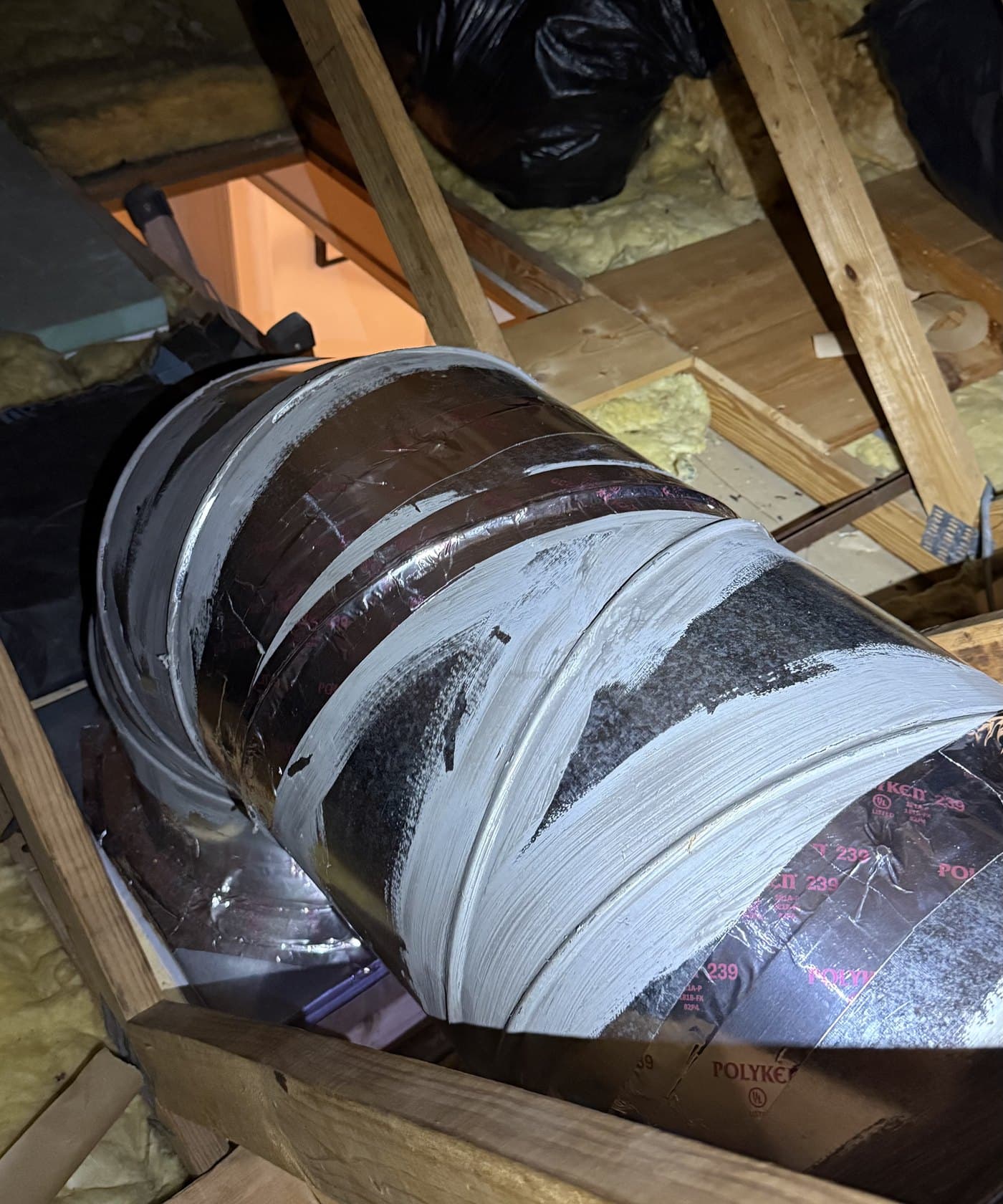
Most leakage lives in a handful of predictable places: the plenum connections at the air handler, the boots where a duct meets the floor or ceiling, the joints in old flex that was never strapped properly, and returns that were framed into a wall cavity and left to breathe whatever the wall breathes. Sealing those is mastic and hard work, not magic.
Crushed and kinked flex is its own category. A run that has been stepped on in an attic, or pinched around a joist, can lose most of its airflow without looking like anything is wrong. Those get repaired or replaced outright.
When the work is done we measure again. Static pressure and total airflow get read a second time, and the before and after numbers go in writing. That is the only honest way to show a repair did what it was sold to do.
When repair isn't enough, redesign
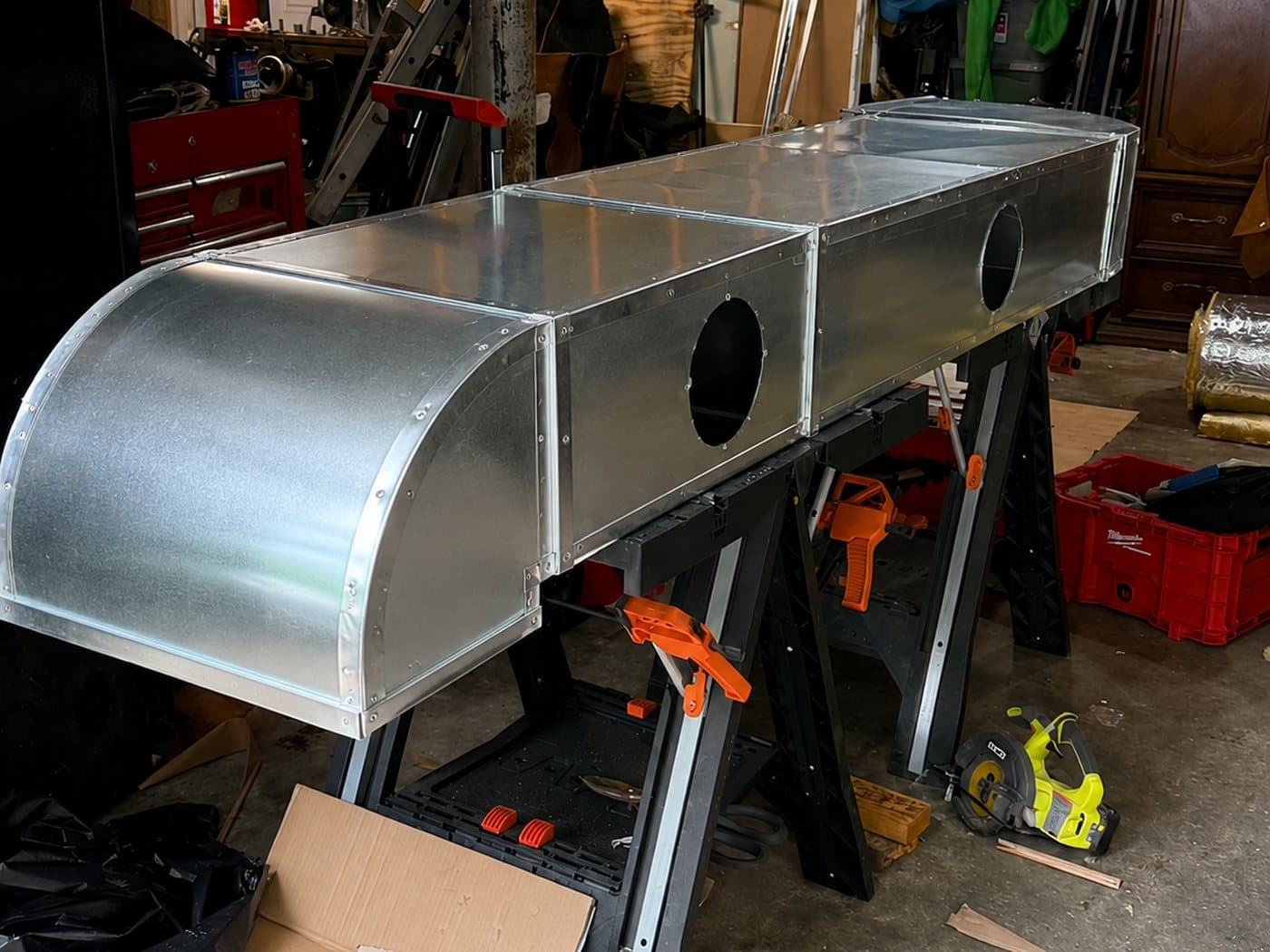
Sealing a duct system that was undersized to begin with makes it tighter, not adequate. The most common finding by a wide margin is not enough return: one grille trying to feed a system that needs two or three, or a trunk that was sized for a smaller unit and never revisited when the equipment was replaced.
When that's the case we design the fix with Manual D rather than copying what was there. Trunk and branch sizing come from the room-by-room loads, the same Manual J numbers that drive equipment selection on a replacement, so the ducts and the equipment are finally working on the same problem. It costs more than sealing does. It also gets you a system that works.
Insulation and condensation
Ducts running through a Tennessee crawlspace or an unconditioned attic live in weather. When the insulation has fallen off, compressed, or was never adequate, you pay to cool air that gives its cold back to the crawlspace before it reaches the room. In humid weather the duct itself starts sweating.
Sweating ducts are a moisture problem with a real cost: wet insulation, stained ceilings, and exactly the conditions mold needs to take hold. The fix depends on where the moisture is actually coming from, which is a question worth measuring rather than assuming. Sometimes it's insulation. Sometimes it's a leak pulling humid crawlspace air into the system. We'll tell you which.
Common questions
Duct Repair questions, answered straight.
- How do you find duct problems without opening walls?
- Static pressure tells us whether the duct system is restricting the equipment and which side is doing it. Total airflow tells us how much the ducts are actually delivering. A physical inspection of the attic or crawlspace finds the leaks, kinks, and disconnects. Leakage, restriction, and sizing are three different problems with three different fixes, and the readings point to which one you have.
- Do you clean ducts?
- Duct cleaning isn't what we sell. It doesn't fix leakage, restriction, or undersized returns, which are the things that actually cause the complaints people call us about. We measure first and tell you what the readings call for. If cleaning is genuinely warranted, we'll say so.
- Can ducts be repaired without replacing the system?
- Usually, yes, and it's often the better order to do things in. Fixing airflow on equipment that still has years left in it can resolve the comfort complaint outright, and if replacement does come later, the new system gets installed into a duct system that can actually carry its air.
- How do I know whether to seal my ducts or replace them?
- Static pressure and airflow answer that. If the ducts are sized correctly and leaking, sealing fixes it. If the returns are undersized or the trunk was never right for the equipment, sealing gives you a tight system that still can't move enough air. Then a Manual D redesign is the honest recommendation.
Where we work
Duct Repair across Greater Chattanooga.
Same measured process in Chattanooga and the towns around it. Find your area:
The standard
- Measured diagnostic on every visit
- Findings and price in writing before any repair is approved
- Refrigerant recovered, weighed, and logged
Comfort Club members get priority dispatch and a reduced rate on service calls.
Financing available on jobs over $500.